Strength vs Stiffness: What Actually Makes You Faster?
Strength is the quality that we all chase consistently. It’s easy to train, easy to measure and easy to improve.
The RTP process can be long and arduous for many athletes.
It can be a real struggle to tick the boxes week on week with no end in sight.
And athletes are always asking WHEN they are going to be ready to return to team-training.
And the answer, as frustrating as it is, is simple.
I don’t know.
Unfortunately, I can’t predict the future.
But I do know that you’ll be ready to return to sport when I’ve seen you achieve a number of things.
And that unfortunately means that you’ll be ready when you’re ready.
There’s no point putting a date on it.
That’s not how the body adapts.
You’ll be ready when you’ve done the work and your body has achieved the desired adaptation to last the demands of the game.
If I were to hang my hat on a few different metrics that we look for.
Then I’d put it down to 4.
Strength, Reactivity, Speed & Confidence.
If you have achieved each of those, then it’ll be very likely that you’re ready to get stuck back into some more chaotic work with the group.
And thankfully, these metrics are relatively easy to measure.
This one is self-explanatory.
If the tissue that has become injured in the past hasn’t achieved the necessary level of strength through your rehab & training, then your risk of injury is going to be very high.
This is the quality that many therapists and coaches hung their hats on for years as the only valuable one to measure progress.
And whilst it definitely is not the be all and end all.
It certainly is important.
If a tissue doesn’t have the capacity to generate enough force to tolerate specific movements on the pitch, then risk of injury is going to be very high.
Many times athletes may suffer injury as a result of such a force deficit.
And when they suffer that injury, the injured tissue becomes inhibited and as a result its capacity to generate force is impacted negatively further.
So, then we have a lot of work to do to not only get that tissue back to the same level as it was at.
But also surpass that level so we can reduce risk of injury upon the athlete’s return.
If we simply get the athlete back to the level that they were at, then we haven’t actually changed very much.
Risk of injury is likely almost the exact same as when the original injury happened.
So, we need to set tangible and realistic goals throughout the process to hit as we move steadily back towards reintegration.
Luckily strength is quite easy to train and quite easy to measure.
But without it being developed to a sufficient level you’ll never be released to return to play.
That’s the bottom line.
It was the gold standard for years for a reason.
And it still undoubtedly is very important.
This one is something that more recently has been identified as a key quality for informing readiness to return to play.
Previously only elite organisations would’ve had the resources to test reactivity regularly.
But now, given the availability of a variety of testing tools at our disposal, just about anyone can measure it.
It’s a quality that elite athletes definitely possess.
Their bounce.
Their spring.
Their X factor.
And in the past, when athletes would’ve solely focused on strength throughout the rehab process, it was something that dropped off quite quickly and was difficult to get back.
Unfortunately, it’s very much a “use it or lose it” type quality.
So, when you suffer a serious injury and you can no longer sprint, jump and cut, it can drop off due to the detraining effect.
Previously, coaches would’ve believed that this drop-off was unavoidable and unimportant.
But now we know that we can reduce the effect of this reduction in reactivity through effective programming and training.
Tendon stiffness is not something that we need to lose.
We can train our tendons using isometrics in the early stages of the rehab.
Then transition to more ballistic type exercises in the middle of the process such as jumps, assisted-plyometrics and med ball training.
And then finally move through our return to jumping phase in preparation for our return to run.
However, for various different injuries, we will have different metrics that we want the athlete to surpass to prove to us that they’re ready for the next phase of the process.
Luckily now we’re able to give them quantifiable goals that help them to stay aligned and see progress throughout the process.
The answer becomes simpler as to whether you’re ready to move on.
Did your RSI (reactive strength index) improve to >1.0 or not?
Is your single leg RSI <10% difference left to right?
The value in physical testing data to inform our decision-making throughout the rehab process can not be denied.
Again, if you haven’t got it to a specific level, then I’m afraid I can’t confidently release you for return to play.
This one is pretty self-explanatory.
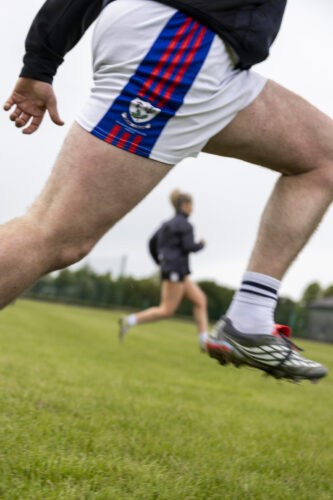
If you can’t sprint, then you have no business being on a football, rugby or GAA pitch.
Your strength and reactivity have been built to tolerate the highest intensity demands of your game.
And sprinting at max speed is the highest intensity action you’ll execute on the pitch.
If you haven’t earned the right in the gym, then we won’t allow you to sprint out on the pitch.
And likewise if you haven’t earned the right in your individual RTP work, then we’re not going to release you to go back to high-intensity, chaotic drills with your squad.
The second that there’s any sort of competition, we all know that that’s when the intensity rises.
And when intensity rises, so too does risk of injury.
So we’ve got to be confident that you can tolerate the highest risk activities of your sport.
And that’s why sprinting is the action that we chase over all others.
The likelihood is, that if you can sprint at max velocity, a jog or any speed under your max speed will be absolutely fine.
We push you to hit speeds above those that you’re likely to hit in game-play.
That way, everything under that speed becomes a hell of a lot easier.
And your risk of re-injury reduces as a result.
It’s also important to remember that unlike with our reactivity and strength, speed is not something that we can really train in the gym.
It’s a “use it or lose it” type quality as well unfortunately.
So, we must gradually reintroduce it during the return to run stage of the process.
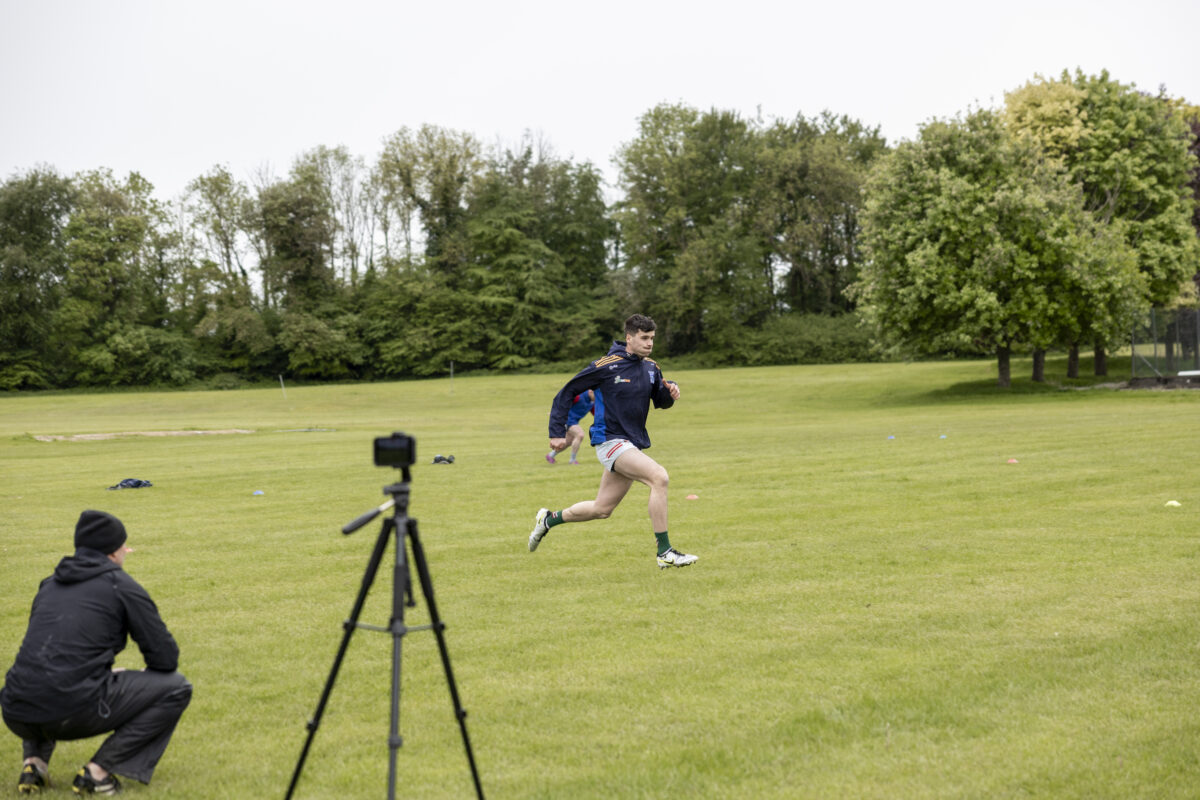
We use a short-long approach, starting with accelerations and building into max velocity work week by week.
We earn the right to push your ceiling up week by week.
10m->20m->30m->40m+
And we aim to be tolerating 90m @ >90% of your max velocity before we can say that you’re ready to return.
But hopefully, we’ve done a stellar job throughout the process and your max speed now exceeds your previous one.
If we’ve done things the right way then this is extremely likely.
And it means that you won’t simply be returning to play the same athlete as before.
You’ll be returning a faster and more capable one.
The final aspect of performance that we need to see before you get back to sport is slightly less quantifiable.
However, without it, you’re never really going to feel comfortable getting stuck back in and as a result you’ll be likely to play within yourself and your risk of injury may be higher as a result.
Confidence is not something that you either have or don’t.
We all are confident in different aspects of life and to greater or lesser degrees.
The goal of the entire training process is to create confident and capable athletes.
Your training and RTP should mirror your sport, so that when you return you feel as though everything that you’re going to experience out there has already been completed at some stage of the process.
This is where our return to change of direction and gamespeed phase of the process proves it’s worth.
When you’re out on the field, there’s a lot going on.
You’re being tasked to read what’s happening in open play and respond accordingly with both your movement and technical execution of your skills.
This is an essential aspect of the process and can’t be skipped.
We must be able to sprint at maximal intent, but we also must be able to slam on the brakes when required to as well.
We must cut and change direction to both evade and track the opposition.
So, it is our opinion that this stage of the process must be trained accordingly as well.
We set up drills that are specific to the game and the athlete’s role within it.
We have the athlete execute these drills under increasing constraints of intensity, specificity and chaos until the athlete feels competent in their execution within them.
Then we challenge the athlete further, progressing the drills into games and bringing in more defenders, more or less space and repeating them under conditions of more fatigue.
At this stage of the process, your RTP should look more like the sport and less like the physical training you’ve already been through.
Your decision-making within the chaos should be challenged so that it becomes almost non-conscious when you return to work with the group.
You should be entering that first session with the group feeling like you’ve left no stone unturned in your rehab and RTP.
Your body is capable of tolerating the demands of the game.
And your mind is capable of making the right decision at the right moment when called upon.
We give our athletes confidence with our thorough RTP process.
There’s nothing they haven’t done.
And nothing they cannot do when they return.
They have confidence in themselves.
And we have confidence in them too.
And that’s when you’re ready to return to play.
That’s when all the boxes are ticked.
And that’s when all that’s left to do is go out there and perform.
You’ve earned the right.
You’re ready.
Now go and do it.
Strength is the quality that we all chase consistently. It’s easy to train, easy to measure and easy to improve.

Almost every single athlete that has suffered from groin issues in the past has been prescribed the copenhagen plank as

This is a hard nut to crack. Most athletes come to work with us in pain. They want their pain

Here to help you achieve your health and performance goals.
At Petey Performance, I’ll assist you every step of the way. What’s stopping you?
Take ownership today.
© 2021 All Rights Reserved
Subscribe to Petey Performance and get updates on new posts plus more exlusive content.