Liam works at the gym I train in.
I spoke to him over a year ago about his low back pain.
At his worst he could barely walk.
I talked to him about his training volume.
I talked to him about his training content.
I gave him a few recommendations and thought nothing much more of it.
As most young athletes do…
He ignored my recommendations.
And continued to train as he always had.
High volume.
High intensity.
Little room for recovery and work that was actually going to improve his movement efficiency.
I thought not much more of it.
Most athletes don’t heed your advice.
So you learn to simply get on with living your own life and let them make mistakes themselves.
That was until…
His condition degenerated to such an extent that he was struggling to walk, let alone coach his exercise classes.
That’s when he decided that enough was enough.
He reached back out to me and said that it was now time to give a different approach a go.
It was either that or…
Retirement from senior hurling.
In the meantime he had had a number of injections and a nerve block just to treat his pain.
This was simply to get him back to activities of daily living.
The thought process was likely to treat the pain as a symptom and dampen that signal to his brain.
This worked occasionally.
But then the pain would come back with a vengeance.
Because he was missing a huge piece of the puzzle.
Elite sports rehab & RTP isn’t just about treating the symptom.
It’s about developing the athlete as a whole so they can tolerate the demands of their game and perform to a high standard when the game is on the line.
Passive treatments can help us to get to the start line.
But active rehab work is what allows us to take the next step.
Nothing changes if nothing changes.
If Liam didn’t address his movement efficiency and improve his strategy…
As well as ironing out deficits in strength in specific areas…
Then the issue was just as likely to come back again in the future.
The only answer was to improve his ability as an athlete, by increasing his tolerance to load and improving his movement strategies in terms of efficiency.
And that was going to take time.
Time he hadn’t given it before.
But not only time.
It required a specific approach to his rehab & athletic development.
Not a cookie cutter program.
But exercises specific to his body, his capacity, his sporting demands and his schedule.
And that’s where we came in.
A lot of the work we implemented was new to Liam.
It took him a long time to get accustomed to it.
But that’s ok.
In fact it’s expected.
If we gave him work that he was able to do easily…
Then we wouldn’t be very good coaches would we?
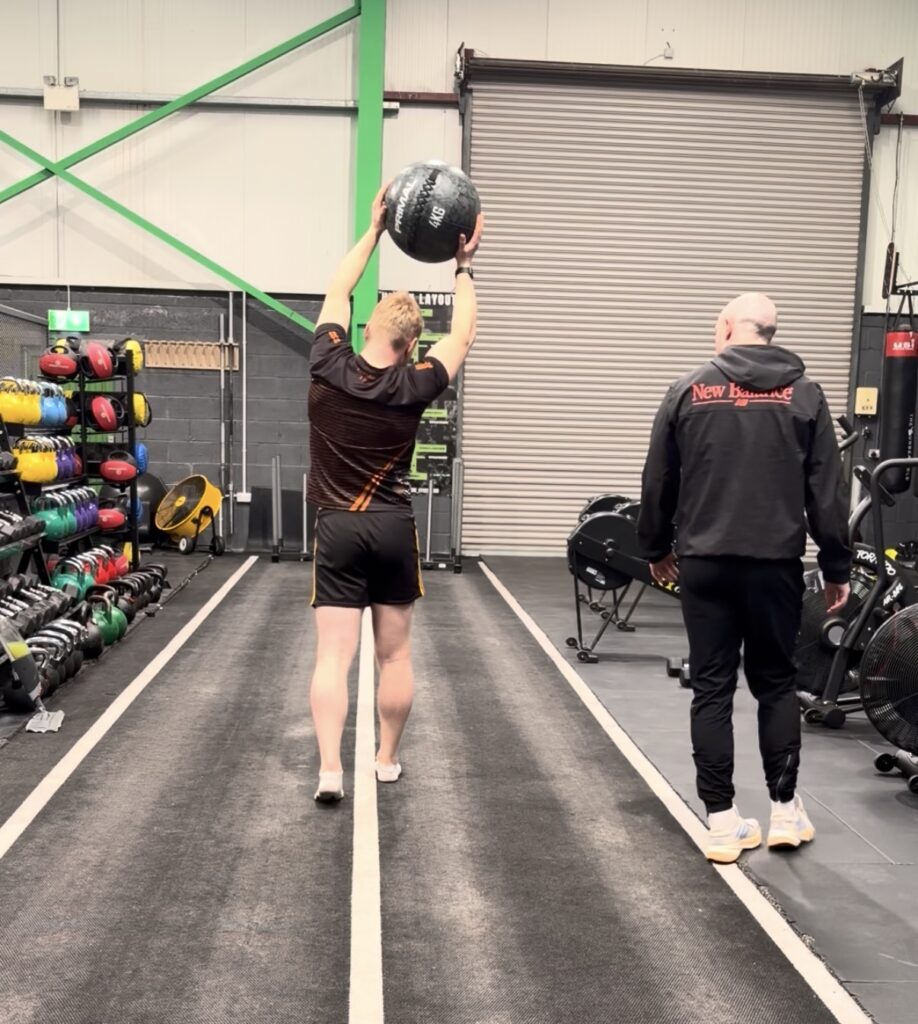
We focused on improving Liam’s mobility and neuromuscular control.
We focused on strengthening his plantar flexors and posterior chain.
We focused on improving his lumbopelvic control and his co-ordination in multi-directional tasks.
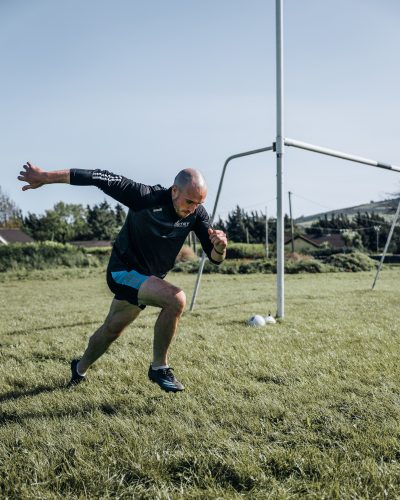
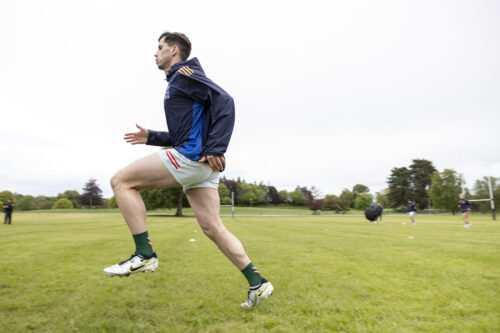
We emphasized the importance of developing more efficient linear running and change of direction mechanics.
And we didn’t rush his transition back to sport.
We gradually released him to return to play, responding to any flare-ups in his symptoms with moderate deloads and more specific work.
And what happened?
Liam progressively grew in terms of both confidence and performance.
The work we were doing gave him the evidence that he was improving.
And that helped him to stay consistent with it.
When he returned to match-play, he couldn’t believe how good he felt out there.
He was back covering high volumes of high speed running, accelerations, decelerations and being quite effective in his role.
After one impressive performance off the bench, he earned back his starting jersey for the championship campaign.
And since then he hasn’t looked back.
He’s gone from strength to strength week on week.
But he hasn’t settled for the level he’s got to now.
He’s continued to focus on improving his performance as the season rolls on.
And that’s the key.
Elite performance isn’t something you pick up and put down.
It’s something you practice every day.
But it requires that you meet your body where it’s at.
Accept where you are and what you have to do to reach the next level.
And then commit to action and do it.
The reason Liam’s previous approach didn’t work wasn’t because there’s anything wrong with passive treatments.
It’s because those passive treatments were just masking the root issue rather than treating it.
He wasn’t meeting his body where it was at and giving it what it needed to reach the next level.
He was getting the treatment and then skipping a couple of levels before he flared up and repeated the cycle again.
The only way to break that cycle was to reach out to those in the know for help.
To try something he hadn’t.
And that’s what saved his championship 2026 and potentially his career.
So, if you’re someone has been repeating the same cycle for multiple seasons in a row now and you feel as though you’re getting nowhere…
Then ask yourself the question…
What are you going to do differently this time around?
What have you not done so far?
Have you been painting over the cracks and masking the root issue?
How is this time going to be any different?
The definition of insanity is repeating the same thing over and over again and expecting different results.
What are you going to do to break the cycle this time around?
It may be time for change.