The best athletes don’t just ask “how?”.
They ask “why?”
Many average athletes are happy to be led along and instructed on what they should be doing in their physical preparation.
They take all that’s put in front of them as gospel.
They don’t even really attempt to understand why they are doing the things they do.
They just focus on putting their head down and doing the work.
And that works for some of them.
But the best athletes always strive for more.
They strive to do things better than others.
And they understand that if they are to do so, understanding why they are doing certain things will help them to implement positive changes.
It’s the same thing as on the field of play.
The best players aren’t the ones that just go out there and execute the gameplan.
They’re the ones that understand the gameplan as well.
Having an understanding of why we implement a process helps us to achieve the ultimate solution.
Because things won’t always go to plan.
We need to be able to think, adapt and overcome in any one moment.
Because we live in an imperfect world.
Shit will hit the fan from time to time.
And the very best athletes understand that that is the case.
They’re not just preparing for the next game.
They’re preparing for next season.
They’re adding more strings to their bow.
They’re becoming a better, more well-rounded and more educated athlete.
And that’s what we as coaches strive for.
We love coaching the educated athlete.
We love working with the athletes that are always asking questions.
We love working with those that take an active role in their own performance and recovery.
Because trusting the process blindly might work some of the time.
But it only works if the process is airtight and the right conditions are in place.
However, if you understand the process and why it is likely to achieve the desired outcome, then you’re going to be much better able to implement it to a high standard.
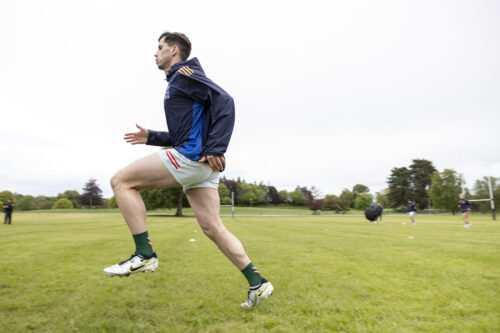
An athlete that knows that they must improve their frontside mechanics in a sprint may apply themselves with intent in each rep.
However, the athlete that knows why they must improve their frontside mechanics will likely apply themselves with intent in each and every rep, of each and every session, and with each and every exercise that’s relevant to that goal.
When we coach an athlete, we know that we’re not likely going to be coaching them for their entire career.
So, our goal is always to elevate the athlete to a higher level of performance.
But our secondary goal is always to elevate the athlete to a higher level of education around their performance as well.
We aim to empower the athlete.
We aim to give them the tools necessary that they won’t ultimately need us anymore.
We aim to eventually make ourselves redundant.
That is how we assess whether we’ve been effective in our role or not.
How much does the athlete NEED us now?
Vs
How much did they need us at the beginning?
And what occurs in the middle is all about helping the athlete to grow.
That growth doesn’t just happen in the gym and on the field.
It happens at home, when the athlete is recovering as well.
It happens in each of their actions every day in preparation to perform.
It happens in the intent that they apply to each and every exercise in their training program.
It happens in the decisions that they make when things don’t go to plan.
It happens in the choices that they make in their daily life that set them up for success.
We help them to be an educated athlete.
A 24/7 athlete.
The athlete that can do it on their own.
But that chooses not to.
The athlete that helps to educate their peers.
The teammate that everyone goes to with their questions.
The teammate that has the tools necessary to help those alongside them.
That can point them in the right direction to go.
And that only occurs when the athlete owns their own performance.
They take ownership of their own process.
They understand the why behind the what.
They focus on not just their physical development.
But their psychological development as well.
They focus on levelling up both inside and outside the gym.
They commit to long-term self-development.
They don’t look for their hand to be held.
They ask to be pointed in the right direction.
And they take the lead from there.
That’s the educated athlete.
That’s the athlete that stays in the game.
That’s the athlete that doesn’t settle for good enough.
The athlete that strives for better.
The athlete that realises their potential.
And ultimately wins.
Don’t hand your performance off to someone else.
Seek out those in the know, ask questions and take ownership of your own personal development.
Become the educated athlete.